

Add Your Heading Text Here
Can Teething Cause Fever or
Cold-Like Signs
Quick Answer:
Is it normal for my baby to seem warm and fussy while teething?
Yes. Mild warmth and fussiness can happen when a baby is teething because of gum irritation. However, a true fever or signs of illness are usually not caused by teething.
Key Takeaways:
- Teething is a natural stage of development for babies
- Small temperature changes can happen during teething
- Cold-like signs are not always linked to teething
- Simple comfort steps can help with teething discomfort
- Some symptoms mean it may be time to call your doctor
Many parents become concerned when their baby feels warm, fussy, or congested and wonder, does teething cause fever or cold symptoms. These worries are understandable, especially when babies start teething and parents notice new symptoms of teething at the same time.
Understanding what is truly linked to teething helps parents feel more confident. Knowing what is normal and what may point to something else makes it easier to care for a baby during this stage.

What Changes Happen When a Baby Starts Teething
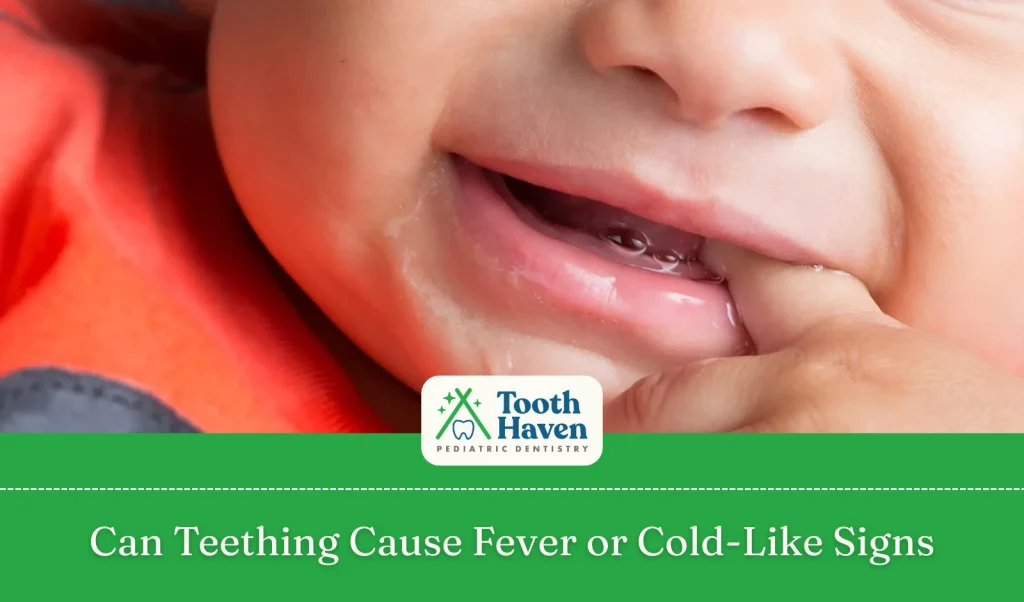
When babies start teething, their gums begin preparing for the baby’s teeth to move upward. This process involves pressure and soreness as each tooth begins breaking through the gums. During this time, parents may notice their baby chew more, drool often, or seem more irritable.
Teething is a natural part of growth, and every baby experiences it differently. Some babies seem mildly bothered, while others feel stronger teething discomfort as each tooth breaking moves closer to the surface. These changes can happen before a tooth erupts.
Understanding Temperature Changes During Teething
One of the most common questions parents ask is, can teething cause fever. Research shows that teething may lead to slight increases in body temperature, but it does not usually cause a true fever. These small changes are often linked to gum irritation and inflammation.
When parents wonder, does teething cause a fever, it helps to know the difference between mild warmth and illness. If a baby’s body temperature rises higher than expected, it may not be linked to teething and should be checked carefully.
Cold-Like Signs and What They Mean
Parents sometimes notice changes that look like a cold and assume they are caused by teething. These signs may include:
- A runny nose
- Mild congestion
- Fussiness or irritability
- Extra drooling
While these signs often appear around the same time as teething, they are not always directly linked to it. Babies explore by putting objects in their mouths, which can expose them to germs. Because of this, cold-like signs may appear while a baby is teething, even when teething itself is not the cause.

Helping Babies Cope With Teething
Teething pain can make babies uncomfortable as teeth continue breaking through the gums. During this phase, parents may notice:
- Shorter naps or more frequent waking
- Increased hand-to-mouth movement
- Changes in feeding habits or appetite
- A need for constant soothing or holding
Comfort steps can help calm teething discomfort and support babies during this stage, including:
- Allowing your baby to mouth safe, textured toys that provide gentle sensory stimulation
- Light gum pressure using a clean finger
- Offering a wet washcloth cooled in the fridge for supervised chewing
- Creating a calm routine to reduce overstimulation
Some parents ask about teething necklaces, but these should be used with caution because of safety concerns. Choosing safe, age-appropriate comfort tools, such as teething rings, helps reduce teething discomfort while keeping babies protected.
Red Flags Parents Should Watch For
While many symptoms are normal during teething, some signs may point to something else. If a baby develops a high fever, ongoing cold-like symptoms, or seems unusually uncomfortable, these signs may not be linked to teething.
If symptoms feel severe, last longer than expected, or worry you, it is important to trust your instincts and call your doctor. Getting guidance early helps rule out illness and ensures your baby gets the care they need.
Final Thoughts
Teething can bring changes that feel confusing, especially when warmth or cold-like signs appear. While teething may cause mild temperature changes, it does not usually cause illness. Understanding what is normal helps parents respond calmly and confidently.
By watching symptoms closely and using gentle comfort steps, most families manage teething with less stress. Thinking ahead to your child’s first dental visit when the time feels right can also help support healthy habits as your baby’s teeth continue to develop.
Gentle Guidance When Teething Raises Concerns
If you have questions about teething discomfort, temperature changes, or signs that may worry you, the caring team at Tooth Haven Pediatric Dentistry is here to help. We provide clear, calm guidance so parents can better understand what’s normal during teething and when extra attention may be needed.
Our pediatric-focused approach is centered on comfort, education, and support for both parents and children. Call (515) 344-3690 to ask questions or schedule a visit when you feel your child is ready.
Frequently Asked Questions
Do I need to worry if my baby feels warm while teething?
A slight warmth can be normal during teething, but a true fever is not typical and should be checked.
Is it normal for my baby to have a runny nose during teething?
A runny nose can appear around teething time, but it is not always caused by teething itself.
Can teething make my baby act sick?
Teething can cause discomfort and fussiness, but signs of illness may point to another cause.
Should I give my baby medicine for teething pain?
Comfort steps often help, but you should speak with a healthcare provider before giving medication.
Do I need to call someone if symptoms last?
Yes. If symptoms continue or seem severe, it is best to call your doctor for guidance.
